 World Magazine 2024

Every time a sword drops from a defeated boss, a critical hit lands in the middle of a fight, or a new dungeon layout appears on your screen, a random number generator is probably working behind the scenes. Players often assume that game randomness is a roll of the dice in the literal sense, but computers cannot roll real dice. Instead, they rely on carefully designed mathematics to produce numbers that look and behave unpredictably. This guide explains how that process works in modern digital games and why developers care so much about getting it right.
Table of Contents
What a Random Number Generator Actually Does
A random number generator, usually called an RNG, is a piece of code that produces a sequence of numbers with no obvious pattern. In a game, those numbers get translated into outcomes. A value between 1 and 100 might decide whether an enemy dodges an attack, while another value might pick which loot table a treasure chest uses. Nearly every game system that involves chance, from particle effects to enemy spawns, depends on this kind of output.
Real-money gaming is one area where these mechanics are scrutinised closely. If you want to see how RNG-driven titles are presented to players in a real-money setting, Crazyvegas’ Australian online pokies are one example, and you can click on this page to explore how those games are laid out. Whatever the setting, responsible play matters, and it is worth remembering that a random outcome in any game is never something a player can reliably influence.
Pseudorandom Versus True Randomness
Most games use pseudorandom number generators, or PRNGs. A PRNG starts from an initial value and runs it through a fixed mathematical formula, producing a long sequence of numbers that appear random. Because the process is deterministic, the sequence is technically predictable if you know the starting point and the formula. The trick is that a well-designed PRNG produces output that is statistically indistinguishable from randomness for practical purposes.
Security-focused applications demand a higher bar. Standards bodies publish detailed guidance on this, and the NIST Special Publication 800-90A recommendation describes approved methods for generating random bits in cryptographic systems. Game developers rarely need that level of protection for a loot drop, but the underlying ideas about seeding and entropy carry over.
Seeds: The Starting Point for Every Sequence

The seed is the single most important input to a PRNG. Two generators started with the same seed will produce exactly the same sequence, and changing the seed, even slightly, produces a completely different one. Developers use this property in several ways. They might hard-code a seed during testing so that a bug can be reproduced, or they might let players enter a seed to share a specific world layout. A Game Developer analysis of PRNGs and controlling fate in video games describes how the seed, the formula and the outputs fit together in practice.
When a game starts without a fixed seed, it usually reads a value from the system clock or another changing source. That is why a new playthrough does not normally repeat the same events, even though the underlying generator is fully deterministic.
Common Algorithms Behind Game Randomness
Many classic systems use a linear congruential generator, which calculates each new number from the previous one using a simple linear equation and then applies a modulo operation to keep the result within a set range. The approach is fast and easy to implement, which is why it appeared in so many older consoles and handheld titles.
Modern engines tend to use more sophisticated families of generators that offer longer cycles and better statistical behaviour. The Godot engine, for instance, documents that it uses the PCG family of generators internally. Developers rarely need to write these algorithms from scratch, but understanding what happens under the hood helps when a result looks suspiciously streaky or when a rare event seems to appear too often.
Why Games Need Repeatable Randomness
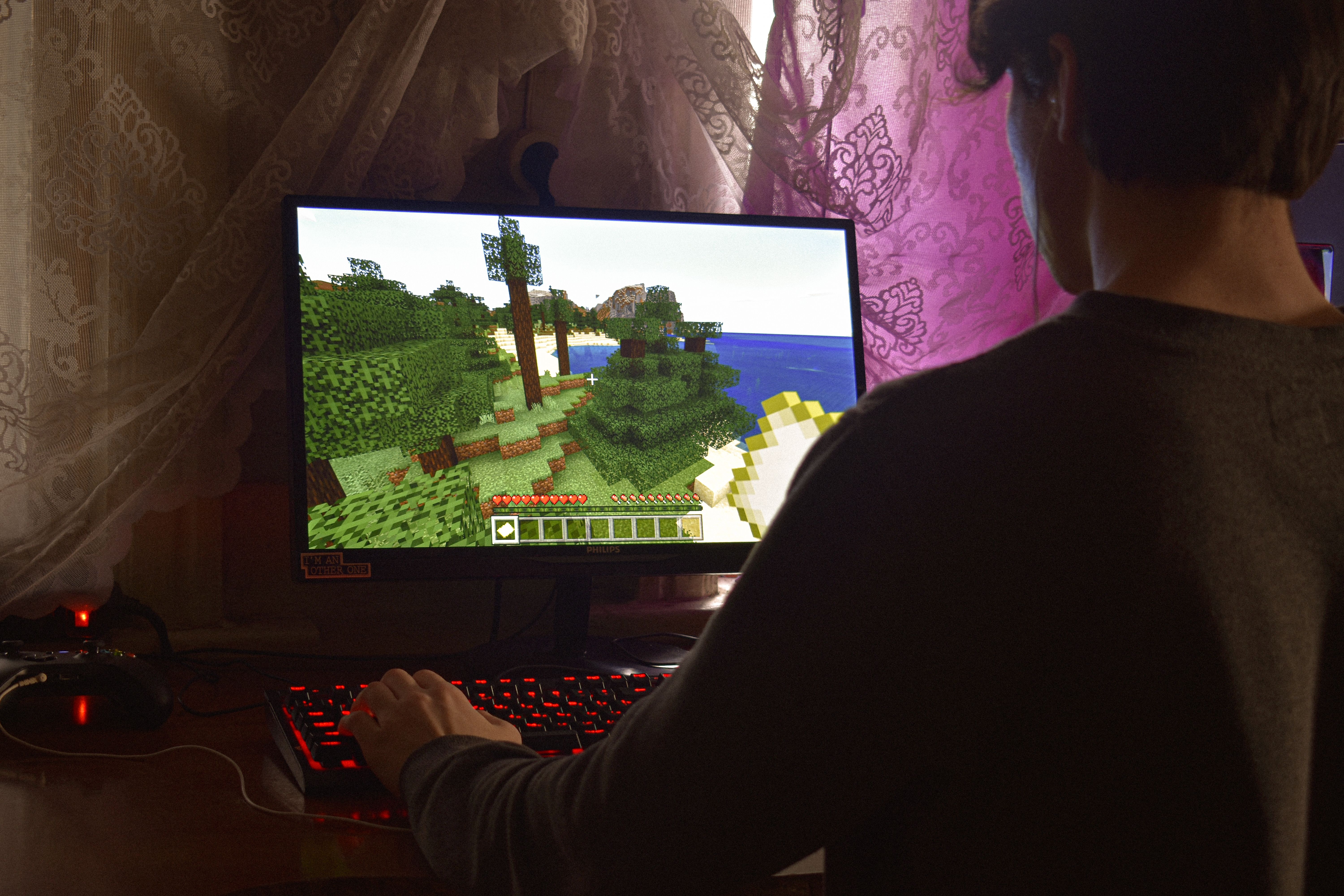
It might seem strange that developers want randomness to be repeatable, but it solves real problems. Procedurally generated worlds are a good example. If a sandbox game needs to rebuild a section of terrain after the player walks away and comes back, it can regenerate that area from the same seed rather than storing every block. Multiplayer games can also use a shared seed so that every participant sees the same map or the same loot.
Repeatability also makes testing far easier. A quality assurance team that finds a strange enemy behaviour can record the seed and reproduce the exact conditions later. Without that ability, many bugs would be almost impossible to track down.
Fairness, Testing and Player Perception

Players are quick to notice patterns, and many believe a drop is “due” after a long dry spell. In reality, a fair RNG has no memory, so each roll is independent of the last one. Developers sometimes add systems such as pity timers, which guarantee a rare reward after a certain number of attempts. These are design choices rather than flaws in the generator, and they are usually disclosed in a game’s documentation or patch notes.
Good developers test their distributions over millions of simulated rolls to confirm that the actual frequencies match the intended odds. When the numbers drift, the problem is often in how raw output is converted into a result, rather than in the generator itself. The modulo bias problem is a classic example, where a range that does not divide evenly into the generator’s output makes some results slightly more likely than others.
Where the Field Is Heading
As games grow larger and more procedural, the demand for reliable, fast and reproducible randomness will only increase. Engines are moving toward generators that are easy to seed, easy to split into independent streams for different systems, and simple to audit. For players, the practical takeaway is that the randomness in a game is designed, tested and bounded, even when it feels chaotic in the moment. Understanding the seed, the algorithm and the conversion step turns a frustrating streak of bad luck into something you can reason about.


