 World Magazine 2024

AI detection tools such as ZeroGPT and GPTZero are increasingly used in schools, workplaces, publishing, and other settings where people want to identify writing produced with artificial intelligence.
Questions about their reliability have grown alongside their use.
Can these tools accurately determine if a person or an AI system wrote a piece of text?
Current evidence suggests that detectors can recognize some AI-generated writing, especially when patterns are obvious.
False positives, false negatives, and inconsistent scores, however, prevent them from acting as definitive proof.
Table of Contents
How AI Detectors Work

AI detectors analyze statistical patterns within written text.
Common signals include word predictability, sentence structure, variation in sentence length, and other patterns frequently associated with machine-generated writing.
An AI checker analyzes statistical patterns within written text, including word predictability, sentence structure, and variation in sentence length.
Unlike plagiarism software, an AI checker usually cannot identify an original source that proves where a passage came from. Instead, it calculates how closely certain writing patterns resemble text commonly produced by AI systems.
High AI scores should therefore be treated as estimates rather than confirmation. A detector might decide that a passage strongly resembles AI writing without having any direct evidence about its actual author.
How Accurate Are AI Detectors?
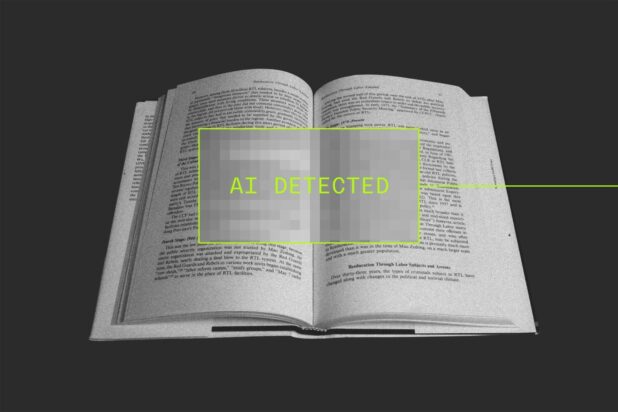
Testing has shown mixed results.
GPTZero has performed well in some evaluations involving clearly AI-generated essays. Problems became more noticeable when human-written material was tested, including cases where genuine human writing received an AI classification.
Other evaluations involving several popular detection tools have produced similarly inconsistent outcomes. Some detectors correctly recognized AI-generated material, while others classified machine-written passages as human.
Results can also change depending on which detector is used. One tool may report a high probability of AI involvement, while another may classify exactly the same passage as mostly or entirely human.
Such differences make it difficult to treat any individual percentage as a factual determination.
Why False Results Matter

A false positive occurs when human-written material is classified as AI-generated. A false negative occurs when AI-generated material is classified as human writing.
Both errors weaken confidence in detector scores, but false positives can create especially serious consequences.
Students may face academic misconduct accusations. Employees could have their work questioned. Freelancers and other professional writers may need to defend material they created independently.
Strong accusations based only on an automated score can therefore create unfair outcomes. Detector results are better used as one signal among several pieces of information rather than as sole evidence of AI use.
What Everyday Writers Should Know
One detection score should not cause immediate panic.
Writers can protect themselves by keeping evidence of their normal writing process. Drafts, research notes, outlines, document histories, saved revisions, and earlier versions can help demonstrate how a piece developed over time.
School, workplace, and publisher policies should also be checked carefully. Some organizations permit limited AI assistance, while others restrict certain uses or require disclosure.
Writers should also avoid repeatedly rewriting genuine work simply to lower an AI-detection percentage. Such changes can damage clarity, weaken personal style, and still fail to produce consistent detector results.
A suspicious score does not automatically mean something improper occurred.
AI Detectors Are Signals, Not Digital Lie Detectors

AI detectors can provide useful clues when evaluating text, but current tools cannot conclusively identify authorship in every case.
False positives can label human writing as machine-generated.
False negatives can allow AI-generated material to pass as human. Different systems may also reach different conclusions after analyzing identical text.
For everyday writers, context and evidence of the writing process matter more than a single percentage displayed by an automated tool.
AI-detection scores can suggest that writing resembles common AI patterns. Such scores cannot conclusively prove who, or what, created it.