 World Magazine 2024

Feature comparisons can be useful, but they become unreliable when the article uses broad words such as “better,” “safer,” or “faster” without defining how those judgments were made. Casino interfaces provide many specific features that can be described directly: search, filters, mobile layout, access to rules, and account controls. A careful editorial comparison starts with measurable observations and avoids turning preference into fact.
Table of Contents
Define the Feature Before Comparing It
A comparison only works when the two products are being judged on the same characteristic. “Navigation” might mean menu depth, search quality, or the number of steps to a rule page. Those are different measures and should not be combined into one vague score.
Clear definitions make it possible for another reviewer to repeat the observation and understand the basis of the statement. The W3C guidance on consistent navigation provides a useful reference for assessing whether repeated navigation elements appear in a predictable order.
Game Catalogs Can Be Compared Structurally

A collection of demo games can be described through category organization, provider labels, filter behavior, and access to game details. A larger number of titles does not automatically mean higher quality, and a smaller catalog does not automatically mean better curation.
The article should describe the structure and let the reader see the trade-offs rather than invent a universal winner. A related discussion of online gambling platforms vs land-based casinos explores differences in game variety and the broader user experience.
Performance Claims Need Testing Conditions
Load speed and responsiveness depend on device, connection, browser, and time of measurement. A statement that one interface is faster needs a documented method. Without that method, the responsible wording is descriptive rather than comparative. Google’s guide to measuring Web Vitals explains the distinction between controlled laboratory testing and real-world performance data.
The same applies to security or reliability. Public pages can reveal controls and messages, but they cannot prove the quality of hidden infrastructure.
Visual Design Should Not Be Scored as Probability
A polished layout may be easier to use, but it does not change random outcomes. Animation, color, and cinematic effects belong to presentation. They should never be used as evidence that one game provides a more favorable financial result.
Separating usability from probability is essential in responsible casino writing. The relationship between design, presentation, and player behavior is also explored in Inside the Casino Mind: How They Predict Human Behavior.

The Homepage Can Support a Feature Checklist
A reviewer can use million.ro as a starting point to identify major navigation elements, then follow each feature into its relevant section. The checklist should record what is visible and where supporting documentation appears.
This method is more defensible than a general impression because every observation has a location and a defined scope.
Comparison Tables Need Common Definitions
Two services cannot be compared fairly if the columns measure different things. A load-time comparison needs the same device and network. A catalog comparison needs the same definition of a title or category. A security comparison needs evidence that refers to the same layer of the system. Without those shared definitions, a table can look precise while combining unrelated measurements.
A responsible article explains the comparison method before presenting the result. If the evidence is incomplete, the wording should remain descriptive rather than ranking one service above another. This keeps the focus on verifiable features.
A small methodology box can explain which pages were reviewed, when the review took place, and which criteria were used. That information allows a reader to understand the limits of a comparison and prevents unrelated features from being combined into one score.
Where conditions differ by market or device, the variation should be stated rather than averaged away. Transparent method notes make a comparison more useful even when the final conclusion is modest.
A comparison is strongest when another reviewer can repeat the same steps and reach the same factual observations. Recording the criteria, device conditions, and review date makes the conclusion easier to audit and keeps the article focused on evidence rather than reputation.
The final table should therefore be readable as a record of the method, not as a marketing score.
Evidence Makes Comparisons More Useful
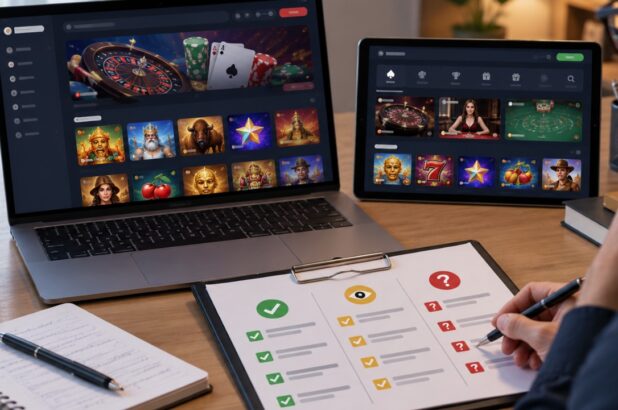
A strong comparison article is transparent about what was tested, what was only observed, and what remains unknown. It avoids unsupported rankings and keeps adult gambling content separate from income promises or strategies.
That restraint improves the value of the article. Readers get specific information about interface behavior rather than a promotional verdict disguised as analysis.